
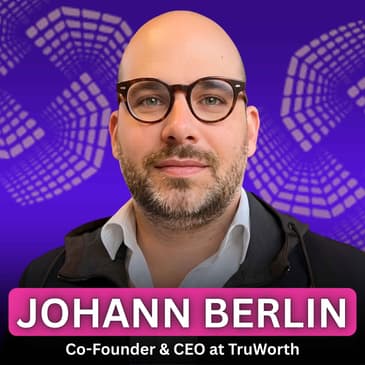
In this episode of The Executive Flow podcast, Subbu Ramalingam sits down with Johann Berlin, CEO and Co-Founder of TruWorth and Impact Delegate at NEXUS Global, to explore the psychological and cultural influences shaping our relationship with wealth and personal worth. Johann discusses the inherited money stories that quietly drive our decisions, the role of fear and risk in entrepreneurship, and how self-awareness paired with small actions can help leaders and executives reclaim agency over their time, attention, and resources.
Key Takeaways
- Understanding Money Stories: Recognize the inherited beliefs and societal narratives around money that influence your decisions and self-perception.
- Courage Over Comfort: The greatest risk is often inaction; stepping forward despite fear and social pressures is key to growth.
- Defining Wealth Beyond Money: Time, attention, and resources constitute true wealth. Material success alone does not guarantee fulfillment.
- Small Actions Build Momentum: Practical micro-actions and self-awareness exercises help embed positive financial behaviors and personal agency.
- Flow and Freedom: Discipline and freedom are intertwined. Flow is achieved by combining focus with the ability to step back and reflect, unlocking creativity and progress.
- Gratitude and Perspective: Regular practices of gratitude can counteract anxiety, foster abundance, and support mental resilience.
Episode Timestamps:
[00:00:00] – Teaser: Johann Berlin, CEO of Truth and Impact, is introduced.
[00:03:02] – Origins of True Worth: Johann shares his journey, influences, and the inspiration behind his work and upcoming book, Wealth and Why We Seek It.
[00:06:13] – Cultural Expectations: Host shares his personal story growing up in South India and navigating family expectations in entrepreneurship.
[00:15:47] – Understanding Money Stories: Practical exercises for journaling inherited beliefs and societal conditioning.
[00:27:13] – Defining Wealth and True Worth: How material, time, and attention components influence fulfillment.
[00:37:11] – Behavioral Science Approach: The methodology behind True Worth programs for scalable self-awareness and habit formation.
[00:41:13] – Discipline and Freedom: Insights from interviews with athletes, Nobel laureates, and meditation practices.
[00:47:07] – Parting Advice: Johann shares guidance on self-worth, dreaming beyond limiting beliefs, and habituating gratitude.
[00:49:06] – Closing: Reflections and well-wishes from the host, Subburamalingam.
🔗 Connect with the guest Johann Berlin:
👉 LinkedIn: https://www.linkedin.com/in/johannbberlin/
🔗 Connect with the guest company, TruWorth:
👉 LinkedIn: https://www.linkedin.com/company/truworthshift/
👉 Website: https://www.truworthshift.com/
🔗 Connect with the Host Subbu Ramalingam:
👉 LinkedIn: https://www.linkedin.com/in/subburamalingam/
👉 Instagram: https://www.instagram.com/subbu_rama/
🔗 Connect with the Host Company, FloWise Leadership:
👉 LinkedIn: https://www.linkedin.com/company/flowise-leadership/
👉 Website: https://flowiseleadership.com/
🔗 Connect with the Host Company, ViVega.Health:
👉 LinkedIn: https://www.linkedin.com/company/vivega/
👉 Website: https://vivega.co/
🔗Follow the podcast:
👉Spotify: https://open.spotify.com/show/1Qsl58ueuZBllszimFGK8z?si=2687c2ceea8f4582
👉Apple Podcast: https://podcasts.apple.com/us/podcast/the-executive-flow/id1802953321
[00:00:00] Why is it that so many people feel this crushing financial anxiety despite living in such a prosperous time? I hear this all the time from people, when do I get to feel like I finally made it? And so often we're just pursuing the next thing and the next thing. What was fascinating as we started to dig into it is... Meet Johann Berlin, CEO and co-founder of TrueWorth and Impact Delegate at Nexus Global, helping people break free from the money stories that are quietly ruining their lives.
[00:00:29] I jumped into entrepreneurship. Once you say the really dangerous word, business, people get really scary. I don't know that entrepreneurship is better or worse. The biggest risk I see is actually the fear to act. The bigger thing is that you won't have the courage to step forward or take a risk because you're scared of losing prestige. Status, not taking action is an action.
[00:00:51] How can one start really realizing their true worth? What are the different steps one can take to realizing true worth of an individual? I'll give people a simple exercise. I really believe in this thing of just...
[00:01:24] Welcome to the Executive Flow podcast, Johann. It's wonderful to be here. Yeah, nice to be here. In Philly. Representing Philly. Representing Philly. We are here in Philly, yes. Yeah, it's great to see you and looking forward to kind of spend more time with you. Yeah. And you've been in a great path, you and Uma, which we'll talk about it as part of the podcast. The people who listen to this podcast are leaders in AI technology and leaders in healthcare.
[00:01:50] So they are going through a lot of decision making that impacts people's lives. Sure. Lots of money impact from a business perspective. Yeah. But often challenged with their identity and struggle with wealth creation, which is actually mind boggling. Yeah. Because I see it all the time. Yeah. Interacting with my peers and other people in the industry. Yeah.
[00:02:20] So I'm incredibly excited to dive deep in this topic and none, specialists none other than you here. First, jumping in, let's talk about the origins. Sure. So folks, Johann Berlin is the CEO of True Worth.
[00:02:38] And we're going to be not only talking about True Worth, but also want to talk about the origins, you know, Johann, your origin and the origin of True Worth. I love to start with what made you start True Worth? Yeah. Tell us about your origins leading up to starting True Worth. Yeah. Well, it's fascinating.
[00:03:03] I mean, I've had the privilege of being part of a lot of amazing projects and having so many experiences and mentors around the world. And one of the things I saw, we were writing a book, so which is coming out later this year called Wealth and Why We Seek It. And one of the things I was doing was just looking at the literature of why is it that so many people feel this crushing financial anxiety despite living in such a prosperous time.
[00:03:30] And what was fascinating as we started to dig into it is it wasn't just understanding. There was a gap between understanding and doing, and then also believing in identity. So a lot of people actually are doing quite well, but they don't have any benchmark for it. I mean, they're comparing themselves to people on social media, or maybe they just grew up in a completely different context.
[00:03:57] And the advice and modeling that they had gotten is totally different in today's world than any of the advice that they had gotten growing up. So they don't even know where to place themselves. And you see this. I hear this all the time from people. When do I get to feel like I finally made it? Right. And so often we're just pursuing the next thing and the next thing. And we can't ever take that time to really understand what are these money stories?
[00:04:24] What are these inherited beliefs that we're living by that are defining so much of how we view ourselves in the world? And where did they even come from? And do I even agree with those anymore? Or are they just inherited? Right. Right. So we saw that and then we saw there was a massive need. I think so much of financial literacy and sort of what I'll call like hustle culture is around just like do better, be better, work harder. And all of that is amazing. Right.
[00:04:53] And then the other part of it is around kind of it's almost paternalistic. So if you listen to like the big traditional financial literacy shows out there, it's very patronizing, like don't have debt, eat less avocado toast. And especially toward young people, what was one of the things we saw. And so we thought, well, a couple of things.
[00:05:13] One is there's a lot of research around taking small actions and what are called like action learning models and this ability to learn by doing. Right. And to bring more pauses and more self-awareness into small micro habituations that build your self-awareness over time and also build habits over time. Right.
[00:05:38] And make you feel like you're building momentum because I think so much of what financial life and financial identity is such a defining feature in American life. So much of it doesn't have to do with what we do. It's just this crushing sense of like expectations that we're putting on ourselves or that we feel society is putting on ourselves or what we're seeing out there on social media. And so that was really the origin of why we wrote the book and why we started the platform. Yeah.
[00:06:07] It's such a fascinating topic also personally. So speaking of expectations. Yeah. So let's dive in a little bit on our own journeys. Sure. Expectations. Right. So maybe I'll start with the expectations part of it. Sure. Now, growing up in India, in South India, Chennai, and growing up in a lower middle class family, my dad was an entrepreneur. And the expectations are you either an engineer, a doctor. Sure.
[00:06:37] Or a failure. Right. Yeah. You had three options. Right. Yeah. Well, as you know, my wife's South Indian. She always said in my house, a B was an F. Yes. Like in her house growing up. Yeah. Yeah. Yeah. So this is the classic story, right? Yeah. Especially from a South Indian standpoint. Yeah. Interesting story, even recently, I jumped into entrepreneurship in the last couple of years.
[00:07:02] And once you say the really dangerous word, business, people get really scary. Right? So it's like, I mean, as long as you have a job, you're working on the job, okay, it's your next promotion, et cetera. Yeah. Once you mentioned, especially in my family circles and start a business, oh gosh, they were like, oh, sorry. It's like, oh, I'm excited about it. Yes.
[00:07:30] So the expectations are in many, it's changing, changing in certain parts, certain communities, certain demographic, et cetera. But at the same time, the expectations where you get 95%, close to 100%, it keeps going higher and higher and higher. And parents are not satisfied in a way. Right?
[00:07:57] So, and it's always hard to kind of like, okay, like as any kid, right, you want your parents to be happy. Yeah. And, you know, fulfill. Sure. But at the same time, you go, go, go. And then like, okay, like why am I doing this? Yeah. Right? So that is sort of like, you know, when you talked about expectations. Yeah. That's always my, you know, journey. And I think it took a while for me to process it. And it's like, okay, well, like I understand it now.
[00:08:24] What, you know, growing up, how did you grow up with expectations? And obviously grew up in California, et cetera. It's like, how were your expectations framed? Yeah. Totally different. And I want to come back actually to, cause I think there's, I want to pull on a couple of the threads you brought up in your story. Thank you for sharing that. But yeah, totally, totally almost the opposite, which is, you know, I grew up, I had some pretty,
[00:08:49] I had like a physical disability, which thanks to modern medicine, I don't have, but I actually had like a crippled leg when I was born. And then when I was really little, I almost died of meningitis. And that my parents believed that that caused cognitive damage and it probably did. It's a, you know, it's a very dangerous disease, especially for infants or small babies. And so growing up, I actually grew up with a lot of learning disabilities and a lot of challenges.
[00:09:17] And I think so much of what was on me was actually kind of the reverse. So, which was all these excuses and enablements around why I wasn't doing well. Right. And how that was showing up in my behavior and in sort of my challenges at school. And what was interesting, I would always test out of classes and like up into higher classes, and then I would end up back in lower classes.
[00:09:44] And what I found for me personally, it was two things. And this is, this really gets at the heart of our stories and our beliefs. I had to overcome those limited beliefs because otherwise I was going to let them define how far I could go. And even more dangerous, I could have small successes, which are way below my potential and feel like they're a success because I'm caught up in this narrative that I had to overcome X, Y, or Z. Right.
[00:10:14] Physical or cognitive disabilities. And I had a couple insights there and kind of revelations as I was going through that journey. But yeah, in terms of expectations, the expectations were the opposite. It was like, take these medications, take extra time on your tests. This is why this is like this. Oh, dyslexia runs in our family. And I grew up in a family of psychologists. And so I think from my parents' point of view, they were actually trying to offer me the best
[00:10:44] of what they thought sort of modern psychology and modern education could offer. But it became its own cage in that respect. And I remember this one experience. I was actually, I was taking some classes at City College. I wasn't even sure that I wanted to do school. I was pretty lost right out of high school. And I was taking a business class and a personal finance class. And I was getting an A in the personal finance and the business law class.
[00:11:14] And I remember I used to get extra time for the tests. And every time I go, my dad would always say, don't forget to get extra time on your tests. And I remember having this thought I had been out with my friends and I wasn't like paying attention. And I just had this honest moment where I thought, I'm not going to pass or fail because I have extra time on the test. I am, I do. It does take me longer to read. And, but I retain more. I just thought it's not going to be because of that. It's going to be because I was out with my friends or doing whatever. And honestly, the world is not going to care.
[00:11:45] They're not going to care at all. If like I need extra time on my tests, whenever I leave this, this kind of enabling environment. And don't get me wrong. If people need extra time or if they need accommodation, they should do it. I'm not putting that down because everybody's situation is different. But for me, I just had to decide, do I want to do this or don't I want to do this? So I remember I took this test. It was a business class and I got an A on it.
[00:12:12] And I, all I did was add some structure and studying in there. So it was like a complete reverse almost of what you were describing, you know? Yeah. Thank you for sharing that. I didn't, I didn't actually, you know, knowing you for a long time, I didn't know this in exact story. Yeah. And it's super interesting. And each, each person has their own story. Sure. And I intentionally don't tell it. Yeah. Because I don't want that to be the benchmark by which what I'm capable of is defined. If that makes sense. Yeah. So step back a little bit.
[00:12:42] Yeah. As a context, right? So Johan and I, you know, meditate together. Yeah. And we're brought to an awesome community. Yeah. And, you know, for folks like us, and I think, you know, we've done enough mental work, I would say, meditating. Work in progress here. Work in progress. I'm definitely working. Yeah, it's work in progress in a way. I would put it that way. Yeah. Yeah. Enough work to kind of at least, you know, start with this. A lot of work in progress, you know, obviously.
[00:13:10] So we've been asking these questions to ourselves, right? And trying to get answers ourselves. But for a general audience, you know, who, let's say they don't spend enough time doing that, right, you know, you were able to articulate your story, reflect on many things, you know, really well, right? That because you've been putting, you are continuing to put a lot of inner work.
[00:13:35] But how could one kind of first, you know, understand their money wealth story? Yeah. And this probably kind of comes to, you know, true worth, right? Yeah. Because that would, as I understand it, that is the start, right? Start from what each of our money story is, expectation story is. Yeah. Tell us how true worth approaches it, how your philosophy approaches it. Well, I have to plug this. We actually have two programs.
[00:14:04] We have a month long money story rewrite, and then we have what's called a seven day, like shift, which is just around like seven small actions that take less than a couple of minutes. You start to build. But I want to actually want to revert back to your story because I feel like having real examples and that context actually helps people beyond the theoretical. You know, you were talking about entrepreneurship and risk, and we have all these inherited beliefs, whether we know it or whether we don't. And some of them are given to us by the society.
[00:14:33] Some of them are cultural, like, you know, some of them are sort of regional, you know, we use that up from California. It's like there's an identity in coastal California. There's an identity here in Philly or in Rio or in London or wherever, in Chennai, South India, right? And so, so many of these things are just inherited beliefs. But how many of them did we choose? And have we ever audited them? Yeah. Have we ever really audited, are these actually what I believe today?
[00:15:00] Or are these just sort of continuation, sort of a perpetual motion of things that were passed on to me? And what I would say is, it's very important when you're doing work on yourself to drop the judgments. Like when you see something is all bad or all good, you really get into trouble because you're missing half the picture usually, right? Like some of these things serve us. Some cultural values, norms, they help us. They kind of can tether us. If things are completely open, it's actually kind of scary.
[00:15:30] Right? So I think that's the first thing. It's just, and I'll give people a simple exercise. Like one, because I really believe in this thing of just do something. Right? So if you're interested, just make a list, take, pause this, take a piece of paper and just start free thought, free association. What are my money stories and beliefs? Right? And just journal throw out. And where did they come from? Okay.
[00:15:55] This simple exercise, leave them on the paper, read them softly, and then walk away from from it in a while and then, and then come back to it. Right? And then Mark, how many of these did I know I was carrying with me? You'll probably be surprised. You'll probably be surprised what's there, but yeah. So let's talk about the one of entrepreneurship that you were talking about, which is like cultural value.
[00:16:20] Um, I mean the immigrants is such an interesting use case or like second generation immigrants as well here in the U S which my wife is one because on the one hand, there's this risk aversion. I remember I was TA in a class in China and I remember none of the really smart kids, smart by meaning I would read their papers and they were really, they would never speak up in class. And I would ask why at the breaks and they'd say, I don't want to lose face in case I'm wrong.
[00:16:48] So they would just stay within the stay within the band. Right. But the paradox here is that on the other hand, like just taking my wife's dad as an example, immigrants take huge risk. You know, like my wife's dad came here with like $5 in his pocket from a small village. She's the seventies. That was like a really large time. Yeah. Yeah. You know, it came to a country. He didn't know it took a huge massive risk, but in his mental map, like entrepreneurial
[00:17:16] stuff, which my wife and I do seems really risky. So there's a paradox there. Right. And so one of these values is around stability or security. Right. And that's one of the main four motivations that we talk a lot about in the book. So understanding if a primary sort of dominating belief or driving force for me is around this idea and identity of security, then just recognizing that, that that is sort of a dominant feature
[00:17:44] in the way that I look at things that can have a plus side that can save you from making bad decisions. But if you're not self-aware of it, then it can bind you and it can keep you from doing things. And just going back to this feeling of risk and entrepreneurship, as an example, I don't know that entrepreneurship is better or worse. Like there are plenty of people who, if you had taken a white collar or a tech job at Google and gotten stock options, like you would have done much better than most of the entrepreneurs
[00:18:14] out there, you know? Yeah. Yeah. But the biggest risk I see in talking with young people and talking with people who have made it big in an aspect of their life is actually the fear to act. That is the biggest risk we can take. Usually most of us are not usually now, if you don't have that like executive regulation to kind of pause before you make a big decision or something like that, like you're, you're not the person I'm speaking to.
[00:18:43] But for most people, the bigger thing is that you won't take, have the courage to step forward or take a risk because you're scared of losing prestige, status, security, right? You're afraid it will impact your legacy, right? And that is, that kind of dominating belief is probably one of the biggest risks that I see, especially young people take. Right? I volunteer to teach meditation, as you mentioned.
[00:19:10] And I remember I was teaching, we were part of a study that Dr. Seppala, who runs the women's leadership program there at Yale and is also a researcher on happiness and contentment meditation. And, uh, we were teaching a program that was part of a study. We were teaching a couple of cohorts. And I remember there was this one thing of around like just kind of an icebreaker improvisation, like typical sort of icebreaker thing, just to, to get people more comfortable.
[00:19:38] And I asked somebody to come up and do some improv of some kind, sing or do something and no one stepped forward. Now let's keep in mind, who is this? This is an incredibly talented group of kids just by the fact that they got into Yale. You know, they're doing like extracurricular, they're cognitively very developed, right? Top one, 2%. Yeah. Probably are a lot of them have art skills or play piano, whatever. Like they, you know, by who, yeah, that's in that it would have to be pretty interesting.
[00:20:08] And I asked them, how come nobody stepped forward? And everybody didn't want to say anything there too, right? They didn't want to take a risk to have the wrong answer. And then one guy said, he said, because I'm not good at that. I haven't mastered that. And I just paused. I stopped everything. I said, well, let's just take that in. So you're 18 years old, 19 years old. You're never going to try anything because you're not excellent at it. Because you can't show you're the best.
[00:20:38] So then imagine what that does for the aperture of opportunity or possibility in our life, in our careers, in our financial trajectories, if we're not willing to do that. So the bigger risk is actually the risk never taken. And not taking action, there's actually a famous quote in the, you know, around action and inaction in the Bhagavad Gita. Not taking action is inaction. Yeah. That's the paradox.
[00:21:08] That's the paradox. Yeah. That's the complexity of it. That is awesome. It's so complex. Yeah. I'm going to piggyback on the risk and the security aspect of it. Sure. And then we'll transition from this. Sure. So I'll tell you, you know, piggybacking on our story. My dad started business when I was actually like sixth or seventh grade, had a business, took a giant leap.
[00:21:32] And this is at that time in the eighties where like starting a business in South India is like the worst thing you could do at that time, right? Yeah. Why are you doing that? You don't have any other options? He was actually in a secure job, et cetera. One child, you know, one person, you know, breadwinner, et cetera. A few years, worked really hard. And then he did a great job starting the business and like sustaining it for four or five years. And then in his mind, it was a failure in his mind.
[00:22:00] It was a failure because he had to come out of the partnership. And I would say, you know, vulnerably sharing this, I think he's still now recovered, you know, from it. Wounds. Yeah. Wounds for decades, et cetera. Did you carry some of that? I'm curious. And that's one of the reasons why actually I didn't even go into business school. Yeah. I didn't even touch business school. At all because that scare was there. Yeah.
[00:22:26] And I went into much more secure routes of technology and like jobs were good and all that stuff. Yeah. And then it took a while to kind of process that. Yeah. And then it's like, okay, well, like. Yeah. It is, you know, so the security aspect of it and the risk aspect of it. Security. Security. And we're, you know, we're talking about inherited beliefs, but there's also inherited shame. Yeah. Right. Exactly. It's interesting. Like what you're sharing.
[00:22:52] Think about like, so my grandpa grew up on a really successful dairy farm out in Kansas. And it was like one of the most successful farms in the area. And after World War I, everybody thought that the production in Europe wouldn't pick back up for a long time. The continent was devastated. Right. So there was this push to have people expand their capacity. Right. And sell American goods to help our, to help our friends in Europe, but also as an opportunity
[00:23:20] to kind of sell America globally. And then the great depression hit and they lost everything. He ended up on trains going, living in hobo jungles, working in mines and, you know, random jobs in ice cream factory, like all kinds of stuff. Yeah. And it was in, so that had an imprint on it. He ended up being, you know, building a business when he came back from World War II
[00:23:46] and selling it and going back and getting a degree at 45 and then getting a master's degree. So he ended up doing what he wanted to do. But it's interesting because even then my dad, we lost our home during the savings and loans crisis. In the late eighties, there was a savings and loans crisis here in the U.S. And a lot of these small community banks just went bust and then got kind of taken over. And a lot of people got foreclosed on. Yeah.
[00:24:12] Well, this was like, there was a stock market crash and then there was a savings and loans crisis. But yeah. And I remember taking in that energy and those beliefs of that feeling because you're a kid. So you take in that thing and it kind of internalized it in a way. Yeah. Right. You carry the feelings in. But what's interesting is there was also kind of a blessing in it for me. And this is paradox with a lot of things in life.
[00:24:39] It's like some people will kind of bypass and say, you know, all bad things are like kind of good or there's some. Well, they feel pretty bad at the time. Yeah. I want to recognize that. Yeah. But there also is lessons, value and sort of hard learned truths. And one of them for me was watching my dad. You know, I saw he's a big, strong guy, got a beard. And he's just like the strongest guy in the world to me when I was a kid.
[00:25:07] He just started crying because we're losing our house and all this stuff. It was horrible for him as a man, as a person, as a, as somebody who wanted to provide for their families. So that's terrible to see when you're a kid. And at the same time, he modeled for me that it's okay to cry. It's okay to kind of surrender and let go. And, but yeah, this point you're bringing up around these inherited money stories. They're not just around like sort of superficial levels.
[00:25:36] Sometimes they run deep. Yeah. And thank you for sharing that. I can totally kind of picture like how that moment was like so important for you, you know, seeing your dad, you know, being vulnerable to your, you know, to the child in a way. Right. So if I am a leader in corporate world, right? Yeah. And, you know, there are several kinds of people. Right. And if I have a belief, let's say, oh, wait, my next promotion is not there yet.
[00:26:05] I don't know whether I'm going to have it. Yeah. You know, my job is going to be replaced, you know, because of AI and all that stuff. Right. And then I'm feeling, okay, like, how am I going to, you know, use my retirement? How am I going to save for your time? Sure. You know, for increasing healthcare costs. Like many Americans are literally one or two major healthcare events. It's crazy. To go bankrupt. Yeah. Right.
[00:26:31] It's, you know, even people who earn a significant income are in that aspect. Right. So in a vulnerable position. So how can one start really realizing their true worth? What are the different steps one can take to realizing true worth of an individual? Yeah. Yeah. Well, let me define wealth. Yeah. To start that, because I think definitions matter here. Yeah. Right. We're using all these terms, but what does that actually mean?
[00:27:01] So our time, attention and our resources is how I would define wealth. And then I'm a spiritual person. So I think also there's a spiritual quotient and all that, which is beyond, we're talking to sort of at a, almost a material level. Sure. Yeah. And you have to have, you have to address the material aspect of life. Yeah. Right. But our time, our attention, right. And our resources is our wealth. Right. And what's interesting is we can choose what to do with our time.
[00:27:30] We can choose what to do with our attention and our resources, but it doesn't mean that we're going to feel worth. Right. That's such a subjective thing. Yeah. When do you actually feel you've become, when do you feel, and people think this goes for like, we're talking about people who are really struggling to get by. And that's just a staggering fact whenever I think about it. But this is also the feeling for people who have been number one on a billboard. Right.
[00:28:00] And haven't had another hit. And they, they feel like it will never change that they were number one on a billboard. But from that benchmark, everything else feels like you're lost if it's not happening or an athlete who, who has some success. And then I was speaking with a professional athlete, not too long ago, professional women's soccer player and a medal winning gymnast, U S gymnast. And they were both telling me, we were talking about entrepreneurship and risk. And one of them sort of stopped me.
[00:28:30] She said, Johan, I'll never experience something worse than leaving, you know, professional athletics. It's like the risk of entrepreneurship feels quite small in terms of identity, hopes, dreams, all of that. Right. And so I think this is true for everybody. Like when do we find work? Right. I think when it comes to wealth and so then wealth building is a separate thing. Right. And I, you know, I'm not a, you know, a hedge fund guru. I've worked in asset management.
[00:28:59] I launched my first startup 25 years ago out of a, one of the first, you know, socially responsible wealth advisory firms. I have proximity to that, but in terms of just identity, right? I think it's just important to know and not fall into the extremes, which is that material stuff is going to make me happy or whole or worthy. I think the first thing, cause what will make somebody whole?
[00:29:28] I wouldn't want to define that for anybody. But the first thing is dropping the illusion of what won't make you whole. Right. You'll be. That's a, say, say that again. Yeah. Say that again. Yeah. It's not necessarily, I wouldn't want to define for anyone, anyone. You should go through that journey yourself of like, what does it mean to become? When do I actually feel like I've become? It's an interesting question. Right. Okay. The first thing is dropping, thinking that the fool's gold, that is our next car.
[00:29:57] That is our next accomplishment is the thing that is going to make us whole. You have to drop the false before the truth can rise up. If that makes sense. And most of us are in this endless chase, just chasing fool's gold, chasing fake reflections in the sand. Yeah. Thinking that it's going to mean something for our own worth and our own identity. Now, so that's one side of it. On the other side of it, and there's this, I'm blanking on the word, but there's this
[00:30:25] beautiful word in Sanskrit, which basically means the ability to enjoy. It's interesting. There's these, these seven wealths. And one of them is this ability to enjoy. And so on the other side of it, you see people who have a lot. And this goes back to the audience that you were speaking about, who have so much more than they even expected often. But that feeling of being able to enjoy isn't there. Isn't there.
[00:30:52] Because as you mentioned, the time component is a big part of it. Right? Identity to your point. And also, I think what you were also referring to is the continuous dopamine hits. Right? We're hijacked. And that's, that's another thing that the systems that are, are hijacking our attention, overrunning our lives, and also making us feel small to a large, making us feel like I need to buy more. I need to signal a better life.
[00:31:21] So I get more likes. So I can socially benchmark myself. Yeah. And you know, we are facing against trillions of dollars of investments, data scientists, et cetera. Smartest minds in the world. Usually wrapped in some virtuous, like compassion or something, right? You go into the Silicon Valley and you roll into these conferences or into these tech companies. And it's all like, we're connecting the world. And they are. Yeah. On one level. They are good things also.
[00:31:47] And on another level, why does a like or a button make the sound that it makes? Why does your phone ping the way that it pings? Yeah. You are the product. Your attention is, that's why it's a form of wealth that you're giving away if you're really hooked into those systems. Yeah. And you know, it's all our personal lives and our professional lives are so interconnected with, you know, a lot of, you know, virtual work, you know, et cetera, right now. Right. So the, one of the things that you mentioned in the framework, apart from time and actual
[00:32:17] money is also attention. Yeah. Right. So that framework in, you know, in mind it, you know, it sounds like a lot of behavioral science goes into your through-worth business. So tell us a little bit more actually about what your product and service is and the behavioral science that is actually the foundation behind it. Yeah. Well, I think I'll keep like the main insight really simple.
[00:32:46] Knowing doesn't mean you'll do different. So I could give all kinds of terms like motivational reasoning and micro habituations and nudges and, you know, social benchmarking and all these phenomenon that drive why we do what we do. And, but I think this main point, right, just because I know doesn't mean I'll do something different. Right. So then what will help me do something different?
[00:33:14] I think that's the logical next question that we asked. And my co-founder, I'm not a scientist by background. I have worked in, you know, behavior change tech and self-awareness and all of those sort of exercises, training, facilitating, spending time with academics. But my wife did get a degree from Harvard in the history of science, my wife and co-founder and also in neuroscience and psychology. But yeah, we are really nerdy about this stuff.
[00:33:41] We just started looking at, okay, well, if people, if knowing doesn't make us do something different, what will? And one of the things that we saw was there's this whole industry. You've heard of MOOCs, massive online courses. Yes, absolutely. Yeah. There's this whole idea around in ed tech around all we have to do is take lecture based formats and scale them on video. Right. And then ta-da, we've scaled education. We've solved the problem.
[00:34:06] Well, it turns out lecture based learning is actually, it is an effective form of learning, the oral tradition. And, but it's not necessarily the best. And by itself, it doesn't necessarily have the highest efficacy. And when you actually dig into so many of the types of programs that are out there, they're really very, very low completion rates.
[00:34:30] Like MOOCs have a, like if you go on Coursera or, the completion rates are incredibly low. Yeah. Right. Because you just, you know, it goes through for me as well. Like I feel like I want to learn something and I sign up and then I pay the money and then like, boom, like I've just finished 5%. How many people have been through that? Right. Yeah. All of us, including me, you know, this, uh, no. So there were two main things.
[00:34:56] One is there's a body of literature around what's called motivational reasoning. And you see this, I know a lot of people are in healthcare and healthcare attack. You see this a lot. Like why our emotions drive our reasoning often, not the logic, not knowing. So I can know I shouldn't have French fries because I might have a heart attack. It doesn't mean I won't have French fries, right? There's some other underlying thing.
[00:35:23] And this is where the beliefs kind of intersect with our actions. So one step is understanding what are our underlying beliefs that are driving our behavior and having some visibility into those. Like the simple exercise that I gave earlier can give us some self-awareness so that maybe those don't have so much gravity in our life. Right. And stitching self-awareness over time through small actions will build that up.
[00:35:50] So you'll kind of go through learning action loops where you do something, you reflect on it, you build some self-awareness. What a lot of people like to do is they like to understand first and then they think they'll do different. Yeah. But that's not the model that we're propagating. So the model we're really focused on a true worth. It's how do you help people build that foundational self-awareness and take small actions and stitch the actions
[00:36:16] that make them feel like they're building momentum around their financial journey. And again, without value judgment. Yeah. We're not telling people do this or don't do that. Right. Because we know even if they hear us and they agree with us, it doesn't mean they'll do something different. And when we feel shame or guilt, we actually are much more likely to self-deceive or kind of look the other way or just avoid altogether, which I think is so much what happens with money and stress.
[00:36:46] And you see people who are so successful, but they do not want to look at their financial situations or they just want to avoid it. So we saw that there was a massive gap for people to get these small actions and have a safe space where people can kind of micro habituate. And we built it in a way that we really want, because there are so many millions of millions of people feeling this money anxiety, we really wanted to build it in a way that could be very scalable.
[00:37:14] So for our corporate clients, that meant scaling across big populations. Like when it comes to coaching or money coaching or counseling or anything like that, the one-to-one model is not scalable, both from a finance point of view, you won't reach enough people because the costs are too high to get there. But also from a time and scheduling point of view, there's a massive friction there.
[00:37:39] So we really wanted to build a system that didn't require us just doing that, but where we could help. And that's also why we wrote the book. That's awesome. So it's in a way, it's like a progress over perfection and getting the momentum going through a lot of self-inquiries and the right motivational questions to kind of trigger actions. And action equals a feeling of agency. Yeah. Yeah. I did it.
[00:38:03] And with the trap in it is if we start to judge ourselves because then we'll stop doing it. As you were talking, it's like fascinating, right? So in executive flow and the coaching that we do for executives and leaders and aspiring leaders, it's really the foundation is on the flow states. Yeah. Right. So flow states could be attained in several different ways, right?
[00:38:32] Not particularly one method. For some people, now I'll speak for myself, right? So for me, a quick walk, maybe just like a couple of minutes of breath work or meditation. Sure. Or, you know, we haven't talked tennis yet or playing tennis for 20 minutes, you know, just gets you into that state, right? Yeah. So that's me. You know, for you it may be a little, you know, different. By the way, I've seen research that racket sports are actually really good for you. Yeah. Like on longevity. Yes, absolutely. Yeah. No, really?
[00:39:02] I have a confirmation bias. Yes. Yeah, yeah, yeah. Exactly. Yeah. Definitely, you know, tennis is something that we share a passion of, share, you know, in a common way. But where I'm going with this is, there's no kind of like a specific dogma to kind of enter, you know, flow states. There's a framework so that your brain goes into that. But there's no kind of perfection. Like many times I've been there, you know, to enter a flow state is like, oh, I have to
[00:39:32] wake up exactly at five o'clock. Yeah. You know, I have to plan it, everything, you know, right way. Let me throw this rigid structure to get more flow. Yeah. And I've done it, like I tried it so many years and I'll be like, okay, you know, I need to eat this, this, this, this, this. It never happens, right? Yeah. Yeah. It never happens. Yeah. But it sounds like that is also, you saw that a lot in, you know, also wealth and worth, feeling worthy.
[00:39:59] And it sounds like it's kind of like very similar, you know, hitting the similar parts of the brain, you know, that actually kind of like, you know, keeps the momentum and action going. Yeah. Yeah. Yeah. I don't know about the parts of the brain, but so let me touch on two things. Sure. I want to touch on the flow, but you had mentioned wealth and wealth building, and this is not financial advice, but this is an observation. It's interesting because time, I was interviewing the chief economist for a consolation fund and
[00:40:29] Jose Diaz. And one of the things he was just talking about in the literature and in the evidence, just say time in the market. You know, there's a famous book about, I think it's the only kind of sanctioned biography of Warren Buffett. It's called Snowball. There's this very strange paradox around discipline and just doing something and flow. And I think it is the same whenever you really look at building long-term wealth over time,
[00:40:59] like start young, let time be your friend. And I think that is so counter to what we're in. So it's interesting. Our distraction is actually blocking our flow. Yeah. Absolutely. We were talking about those systems that are hijacking us. Yeah. And so there, it's interesting, like when you interview athletes, like I've had the chance to interview professional athletes when I was CEO of T-LAC. I remember speaking with one golfer, Olympic golfer in particular. And yeah, flow was deeply connected also with discipline.
[00:41:29] It's like you have the discipline to do it, but then you have to be able to let go. And it's also sounds like boring stuff. I mean, it's an interesting analogy about the Warren Buffett and like the sports. Yeah. It's a lot of boring stuff. Yeah. Day in and day out. Yeah. Yeah. There was one lunch I had with two Nobel laureates. This was part of a community and we were sitting there at lunch and I was really curious.
[00:41:54] I was asking tons of questions and I was, when did you have your ideas that kind of were these groundbreaking ideas? And what was interesting as they were talking, what they said was, and they both said this, they said, it wasn't when we were in the lab. It wasn't when we were like doing the modeling and the mathematics. It wasn't when we were, you know, it was actually when I think one of them was swimming and the other one was going for a walk by the beach. And so it's interesting.
[00:42:21] Now, anybody who wants to tell me that those guys weren't working incredibly hard and totally focused in and dialed in on those problems. You know, that's not true. It didn't happen. You know, you distracted on your phone, kind of flicking through Instagram or whatever. Right. They were focused. They had a discipline, but it was actually in that ability to step back. Step back.
[00:42:46] And you know, my meditation teacher, who you also know from India, that he talks about this, like this paradox of if you don't have discipline, how can you have freedom? Yeah. But if you have too much discipline, if you're a prisoner of discipline, then how do you have it? And the truth is, the deeper truth is, I think freedom is beyond both of those things, like the real sense of freedom. But yeah, it's very strange.
[00:43:15] You're not actually free if you're completely undisciplined and distracted all the time. And then, but I think what's happening, and this is part of why, this is a big part of what really why we wanted to start True Worth, is we saw a lot of young people becoming very kind of almost nihilistic. They get the stereotype that they just want the immediate gratification and the wealth tomorrow. And maybe that's true, maybe that's not. I think the truth is probably more complicated than that. But one of the things that is absolutely true is people feel like they can't break in.
[00:43:45] So they can't break into buying a home. They can't break into the stock market. Stock market prices are so high. Right. Right. And so what they end up is being exploited on a lot of platforms or getting into meme stocks or very speculative crypto, because that's the volatility creates these multiracial multivariable rewards, which is very addicting. That is one of the core insights behind gambling. Yeah. It's a multiracial multivariable reward.
[00:44:15] But also, it's a sense of it creates a lot of FOMO. I'm missing out. So you end up with a lot of people piling in at the wrong times or selling at the wrong times. And just everything we know about money psychology being completely exploited. Yeah. And people making a lot of money in the flows, not in the price. Not in the price. Yeah.
[00:44:39] And so I think, yeah, I think understanding your beliefs, understanding the systems that are influencing us is certainly a very important place to start. But then ultimately, what's going to unlock you from anxiety to agency is action. Action. Yeah. So this is a fascinating conversation. I feel like we can just keep talking. We haven't even touched many of the other things. Yeah, sure.
[00:45:08] Tennis and other passions that we share. So I think we'll wrap up with what you mentioned around unlocking interactions. Yeah. So I think we covered the money story, the discovery and awareness on the distraction part. Awesome that you mentioned about the paradox of discipline and freedom. That's such an important kind of wisdom. How it unlocks flow.
[00:45:35] So, but how finishing off in terms of unlocking things into action and feeling that, you know, the worth like on a regular basis. Right. So sometimes some, you know, I go through it as well. Like it's like, oh, I made it. And then like a year later, it's like, yeah, yeah. And then a year later, it's like, oh my God. Oh gosh, I got a lot of clapped. I mean, it humbles you. Yeah.
[00:46:01] But at the same time, like, you know, you go to the next step and then you also recognize and celebrate your, you know, your progress and successes, etc. So what are your parting thoughts in terms of how one can keep unlocking. Yeah. And keep acting once they go through the initial phases. Yeah. Yeah. Well, I think the first thing I would just say, and I think one of the strange things as homo sapiens is that we actually need permission.
[00:46:29] For some reason, like social permissioning is such a phenomenon as being human. Right. And so I think the first thing I would say is that you don't need anything to be worthy. There's nothing you need to do in this moment that would make you inherently worthy as a human being.
[00:46:50] And just taking that in and knowing that is the most valuable thing I could try to say if I was reaching out to people who feel like whether they're doing well or whether materially or whether they just feel like they're not doing well. That is the most important thing. Your successes, your money, your bank account do not define your worth. Right.
[00:47:13] And so much of what will define is how you treat people, whether you uplift other people, whether you put them down, whether you support other people's ideas, whether you don't. But just knowing no external action, no external validation, you'll never make it. So just stop where you are right now. Know that. Know that. And then the second part of that would be dream beyond your limited beliefs.
[00:47:39] Don't be bound or defined by limited inherited beliefs that most of which you didn't even choose. Most of which were passed on to you and usually are the bad experiences in our life. Memory, we know this from neuroscience. Memory clings to the negative. We remember intense memories more than like intense negative memory more than other memories. Right.
[00:48:04] And then the third thing I would say is and this is something that I've sort of learned and is one of the most valuable practices that I have in my life is habituate gratitude. And I want to be very clear. I don't mean gaslight yourself or spiritually bypass or when you don't feel good. We all go through ups and downs.
[00:48:25] But having a practice of habituating gratitude versus complaining, feeling like a victim, feeling like everything's rigged against us. I mean, on the one side, you feel like the world is completely crushing you. And on the other side, you can move with abundance. There is something for everyone to feel grateful for. Right. What we habituate grows in our life. Right.
[00:48:54] And so moving toward flow. What is a flow of abundance at the risk of saying new agey? Habituating gratitude can really unlock that for people. Johan, brother, that is awesome. Speaking of gratitude, I mean, feel so grateful to reconnect. And you, I feel like I'm not saying you're part of the show. So I want to acknowledge you for the person you are and the friend you are.
[00:49:20] And best wishes, you know, for the new business. Yeah. And incredible success. And this message and all the things that you and Uma are building. You know, it's really important, you know, at this time for everybody, the younger generation, you know, people who are also in the middle, in a middle career and stuff like that. So thanks for, you know, joining me in this conversation. Lovely to be here. Yeah. Yeah. And same to you.
[00:49:48] I'm wishing you a lot of success in your practice and your startup and your, all your endeavors and you're a good guy. I always root for humble, good people to do well. And so I hope that that is the case for you as well, my friend. I'm sure it will be. Thank you, brother. Yeah. Appreciate it. Yeah. Cheers.